
Emile A. Gruppé (1896-1978)

Emile A. Gruppé (1896–1978) was an American Impressionist painter known for his expressive harbor scenes, marine paintings, and landscapes of Gloucester and Cape Ann, Massachusetts.
Working directly from nature, Gruppé developed a distinctive painting style characterized by broad, confident brushwork and a sensitive observation of light and color. His depictions of Gloucester's working waterfront capture the movement of fishing boats, reflections on the water, and the changing atmosphere of the harbor.
-
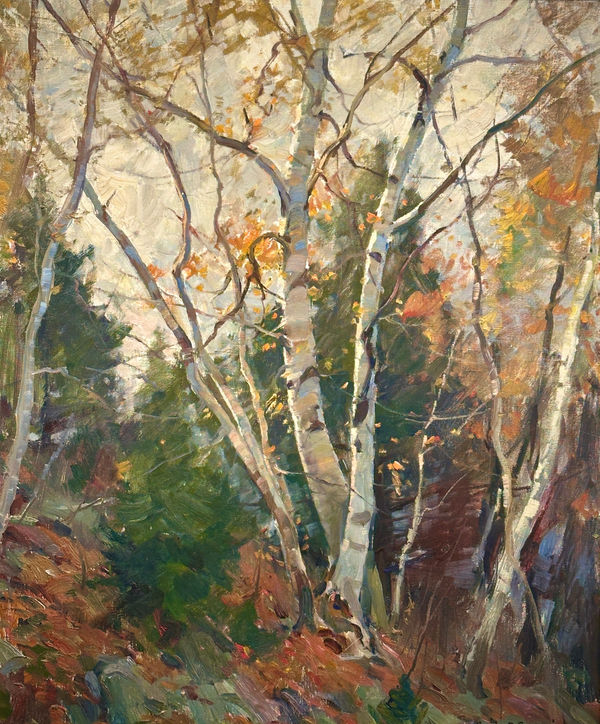
 Birches and Evergreen
-
Country Road
-
Hazy Day
-
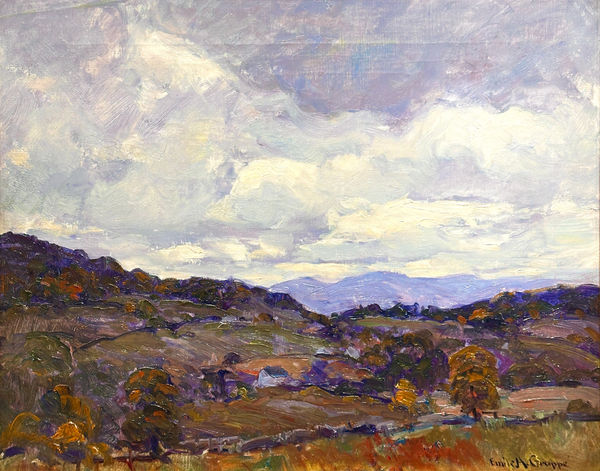
Mountain Landscape
-
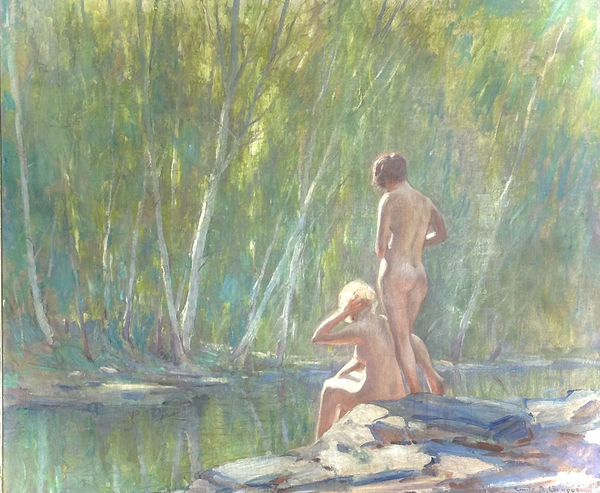
Nudes by a Wooded Stream
-
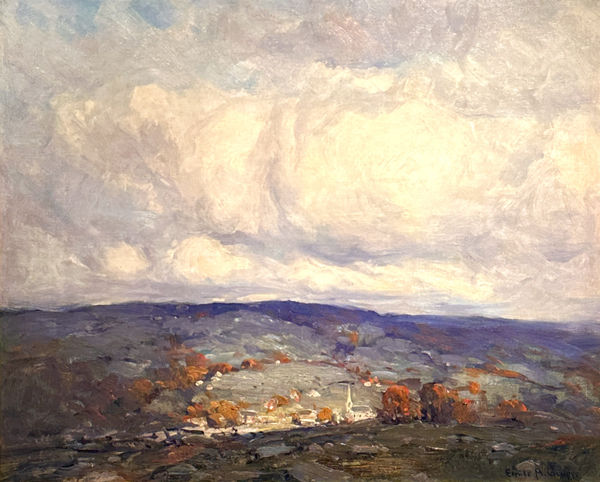
Sunlight on the Steeple
-
The Caviare
-
The Old Schooner
-
The Vilanova
-
“The Caviare”




Emile Albert Gruppé (1896–1978) was an American Impressionist painter whose marine scenes and harbor views of Gloucester, Massachusetts, became defining subjects of his career.
He is particularly recognized for his marine paintings, harbor scenes, and New England landscapes, distinguished by expressive brushwork and a strong sense of light and atmosphere.
Born in Rochester, New York, Gruppé spent much of his childhood in the Netherlands, where his father, the painter Charles P. Gruppé, was associated with the Hague School. The family returned to the United States in 1913. Gruppé subsequently studied at the National Academy of Design and the Art Students League in New York, and at the Académie de la Grande Chaumière in Paris. Among the artists who influenced his development were John F. Carlson and Charles Hawthorne.
Gruppé developed a particular interest in painting directly from nature. His approach emphasized the relationships between color, value, and form, often using broad, assured brushstrokes to convey the character of a scene without excessive detail. Gloucester's working waterfront became one of his most enduring subjects, offering fishing boats, wharves, reflections, and changing coastal light.
In 1929, Gruppé established a studio on Rocky Neck in Gloucester, an important center of the Cape Ann art community. He later directed the Gloucester School of Painting, where he taught generations of students and encouraged the practice of outdoor painting. His influence extended beyond his own work through his teaching and his participation in local arts organizations.
Although Gloucester remained central to his career, Gruppé also painted in Vermont and Florida. These varied landscapes allowed him to explore different effects of season, atmosphere, and light while maintaining the expressive approach that characterized his mature work.
Gruppé shared his understanding of painting through several instructional books, including Gruppé on Painting and Brushwork. His emphasis on direct observation and confident handling of paint reflected the principles he practiced throughout his career.
Today, Emile A. Gruppé remains an important figure in the history of American Impressionism and the Cape Ann School. His paintings are admired for their energetic brushwork, carefully balanced compositions, and vivid interpretation of the New England landscape.